
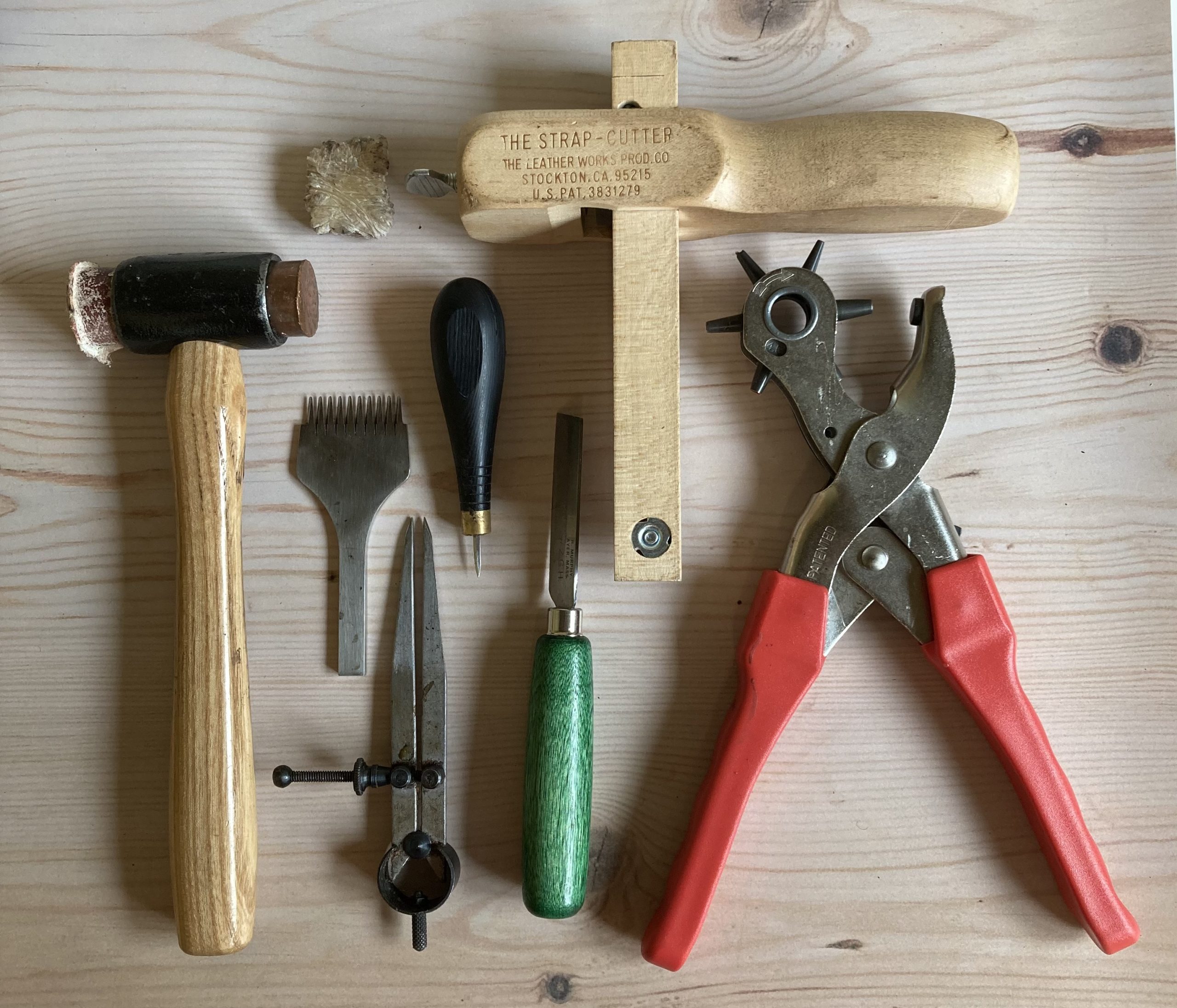
10 Essential Leatherworking Tools Every Beginner Needs
Starting leatherworking is an exciting hobby, but knowing which tools to buy first can feel overwhelming. With hundreds of tools available, it’s easy to spend money on equipment you don’t actually need.
The good news is that you can make wallets, belts, dog collars, keyrings and many other leather projects with just a handful of quality tools.
Here are the 10 leatherworking tools I recommend for anyone starting their leathercraft journey.
1. A Sharp Utility Knife
Every leatherworker needs a reliable knife. Whether you’re cutting patterns, trimming edges or shaping leather, a sharp blade makes the job safer and produces cleaner cuts.
Replace blades regularly—working with a dull knife requires more force and is more likely to slip.
Why you need it:
- Clean, accurate cuts
- Easy to use
- Affordable
- Suitable for almost every project
2. Steel Ruler
Never cut leather freehand.
A heavy steel ruler gives you perfectly straight cuts while protecting your fingers. Unlike plastic rulers, a steel ruler won’t get damaged by your knife blade.
Look for one with a cork backing to prevent slipping.
Perfect for:
- Belts
- Dog collars
- Straps
- Wallet pieces
3. Cutting Mat
A self-healing cutting mat protects both your workbench and your knife blades.
It also provides measurement guides that make cutting leather much easier.
A good cutting mat will last for years.
4. Edge Beveler
One of the biggest differences between homemade leatherwork and professional leatherwork is the edge finish.
An edge beveler removes the sharp corners from your leather before burnishing, creating a smooth, rounded edge that looks and feels premium.
This is one tool you’ll wonder how you managed without.
5. Stitching Chisels
If you want neat hand stitching, stitching chisels are essential.
They create evenly spaced holes that make saddle stitching much easier and produce a professional-looking finish.
For beginners, a set with multiple prong sizes offers the most flexibility.
Ideal for making:
- Wallets
- Belts
- Dog collars
- Bags
- Keyrings
6. Saddler’s Needles
Unlike sewing needles, saddler’s needles have blunt tips.
They’re designed to pass through the holes you’ve already made without cutting the thread or damaging the leather.
Buy a pack—you’ll always want spares in the workshop.
7. Waxed Thread
Strong waxed thread creates durable stitches that can last for decades.
The wax helps the thread glide through leather while reducing tangles.
Choose a thread colour that complements your leather for the best finished appearance.
8. Stitching Pony
A stitching pony acts as an extra pair of hands.
It securely holds your project while you saddle stitch, allowing both hands to guide the needles.
Many beginners don’t buy one immediately, but once they do, they rarely stitch without it.
9. Wooden Burnisher
Burnishing transforms rough leather edges into smooth, glossy ones.
Using a wooden burnisher alongside a burnishing compound gives your projects a professional finish that customers immediately notice.
It’s one of the easiest ways to improve the appearance of your leatherwork.
10. Mallet or Maul
Many leatherworking tools need to be struck to punch holes or set hardware.
Always use a leatherworking mallet or poly maul rather than a metal hammer, which can damage your tools.
A quality mallet will last for years and quickly become one of your most-used workshop tools.
Bonus Tool: Wing Dividers
Although not essential on day one, wing dividers make it easy to mark perfectly even stitch lines.
They help create consistent, professional-looking projects and are one of the first upgrades many leatherworkers make.
Do You Need Every Tool Before You Start?
Absolutely not.
Many beginners delay starting because they think they need a workshop full of expensive equipment.
The truth is that you can make beautiful leather projects with just a few quality tools.
Start with the basics, learn the techniques and gradually add new tools as your skills grow.
Buying quality tools from the beginning often saves money in the long run because they last much longer and make leatherworking more enjoyable.
Final Thoughts
Leatherworking is one of the most rewarding crafts you can learn, and having the right tools makes the journey far more enjoyable. Hopefully this guide of 10 Essential Leatherworking Tools Every Beginner Needs will help you buy what you need.
Rather than buying everything at once, invest in reliable tools that you’ll use on almost every project.
As your confidence grows, you can expand your collection and tackle more advanced builds.
If you’re just getting started, these ten essential tools will give you everything you need to begin creating beautiful handmade leather goods that you’ll be proud of. Each tool is clickable to a link making it easy to order your first tools
Happy crafting!
If you need help getting going then how about booking onto a short course to make your first project
Please note this blog contains affiliate links, there is not extra cost to you to use them but I will earn a small commission
